
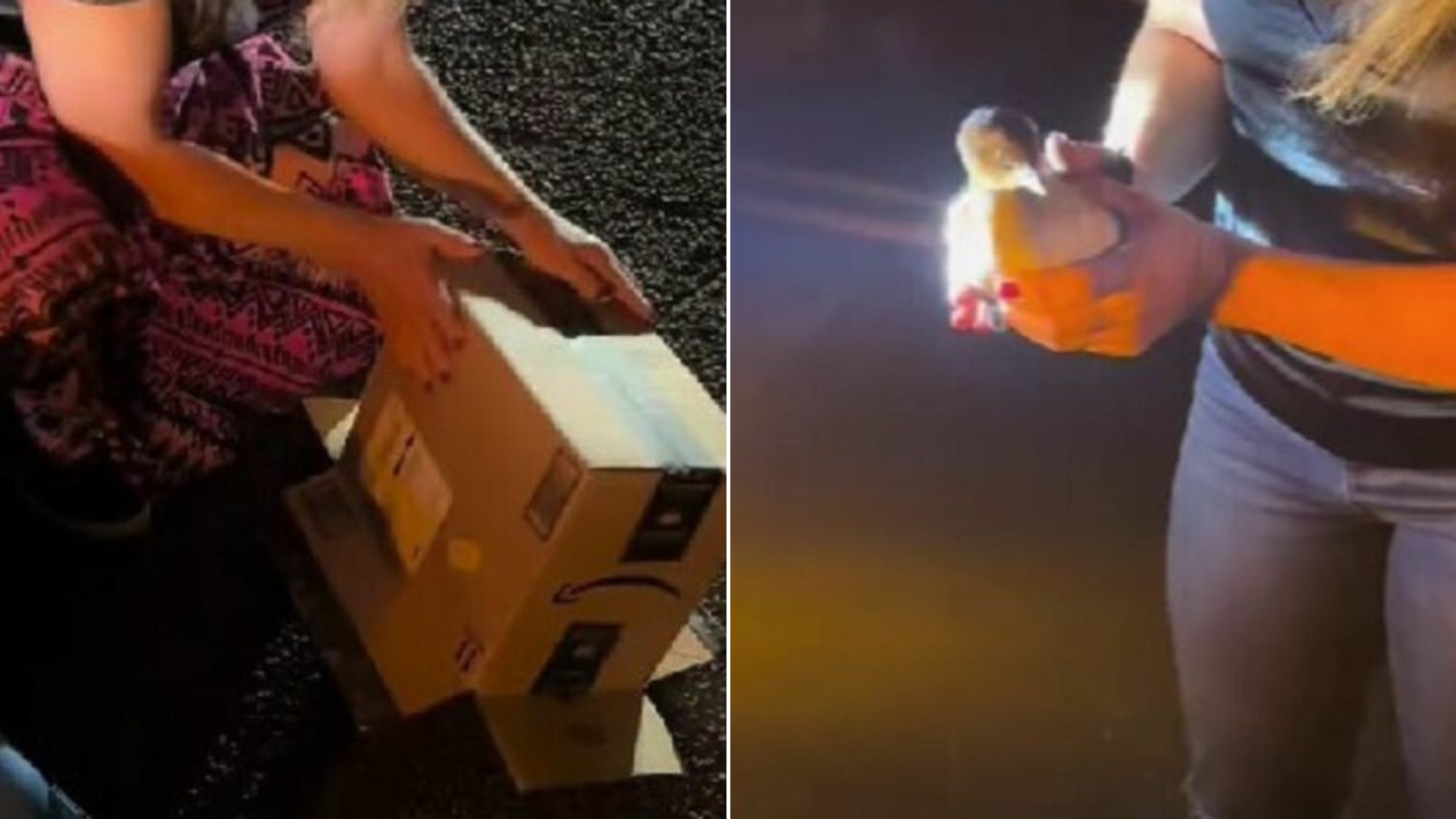
City streets are no strangers to wandering birds, yet in Hewlett Harbor, New York, one passerby noticed something that didn’t fit the usual scene. A tiny creature was struggling near the edge of the road, its movements faint and uncertain.
Concerned, the witness quickly flagged down a security officer who happened to be nearby. Together, they approached the fragile figure.
The officer was puzzled by how little the bird seemed to move, though he guessed it must be a duckling. Wanting to keep it safe from cars and curious onlookers, he placed a cardboard box gently over the animal and reached out to a local wildlife rescuer.
Neither the Good Samaritan nor the officer realized that what they had just sheltered would soon reveal a surprising truth.
Not A Duckling As Assumed

When Karenlynn Stracher, a well-known wildlife rehabilitator and rescuer in New York, arrived at the scene, she was intrigued by the officer’s description.
“When the officer first found me, he told me that he had found an injured duckling,” Stracher told The Dodo. “I told him that it would be very unusual to have a duckling this time of year.”
She chose to confirm before drawing conclusions. Carefully lifting the cardboard box, she examined the tiny creature.

Her caution proved wise. The small bird was not a duckling but a pied-billed grebe, a species uncommon in that part of the country.

“They’re not common in this area. They’re much more common on the West Coast,” Stracher told the officer in a video taken at the site. “But they do end up here. You see them on occasion.”
Karenlynn quickly placed the bird into a secure carrier, providing it with a safe space.
@wildliferehab_kl https://linktr.ee/cookiekl #wildlife #wildliferehab #wildliferescue #everylifematters #piedbilledgrebe #grebe #strandedgrebe #groundedgrebe #greberescue #birdrescue ♬ original sound – KL the Wildlife Rehabilitator
A Concern About Health
Though pied-billed grebes sometimes appear outside their usual range, Karenlynn questioned why this one was found on land rather than water.
Normally, grebes inhabit sluggish rivers, freshwater marshes, lakes, and estuaries, so being stranded onshore raised concern.
She brought the bird home for closer examination. While there were no visible injuries, the grebe appeared nervous but calm.
“It was clear she was nervous, but she was not panicking or struggling at all,” Stracher said.
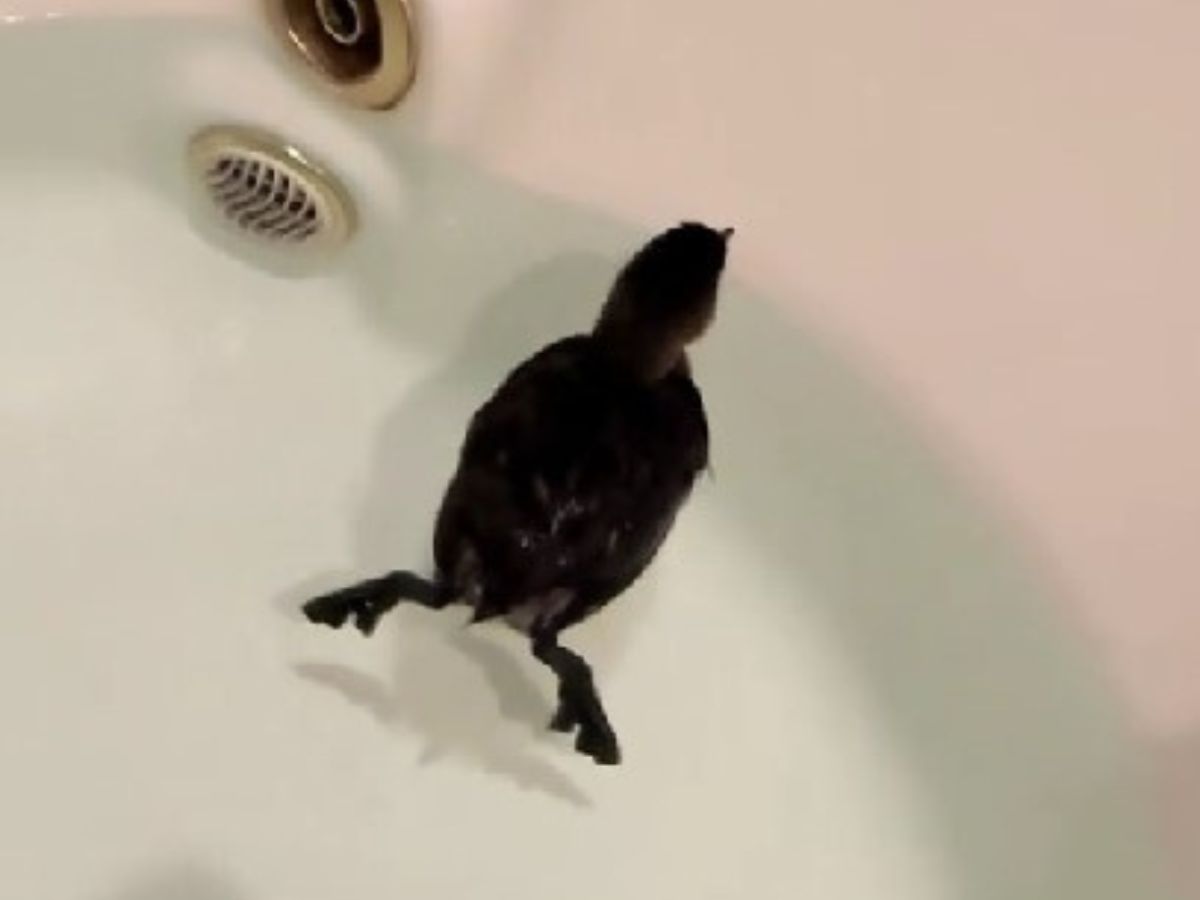
To investigate a likely issue, Karenlynn conducted a simple water test, placing the grebe gently in a tub to observe her feathers.
The results confirmed her concern.
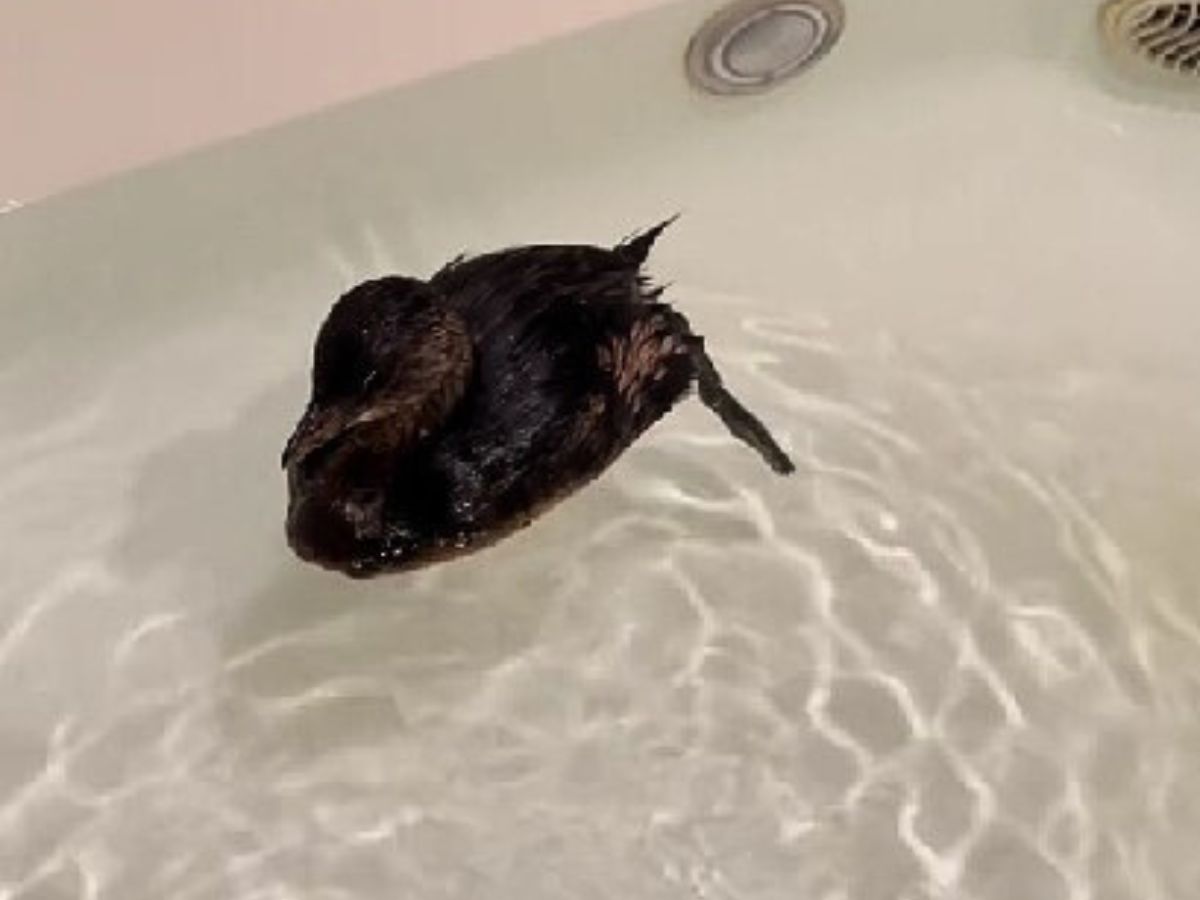
“It is clear here that her feathers are getting wet,” Stracher said in a video she posted on TikTok. “Her waterproofing is not what it should be.”
Waterproof feathers are crucial for grebes, which spend most of their lives on or under water.
A lack of waterproofing can result from parasites, poor nutrition, malfunctioning preen glands, stress, or other common causes, and one of these factors likely affected this bird.
Getting Expert Help
Realizing the condition required specialized care, Karenlynn contacted the wildlife professionals at Sweetbriar Nature Center. Their facilities and expertise would allow them to determine the cause of the grebe’s inability to waterproof and treat her plumage effectively.
Once her waterproofing and health are restored, the plan is to release her into a suitable habitat.
“We expect she will be fully releasable come springtime,” Stracher said.
Though separated from the water she needs, the timely rescue and expert intervention provide hope that this rare grebe will return to her natural environment safely.