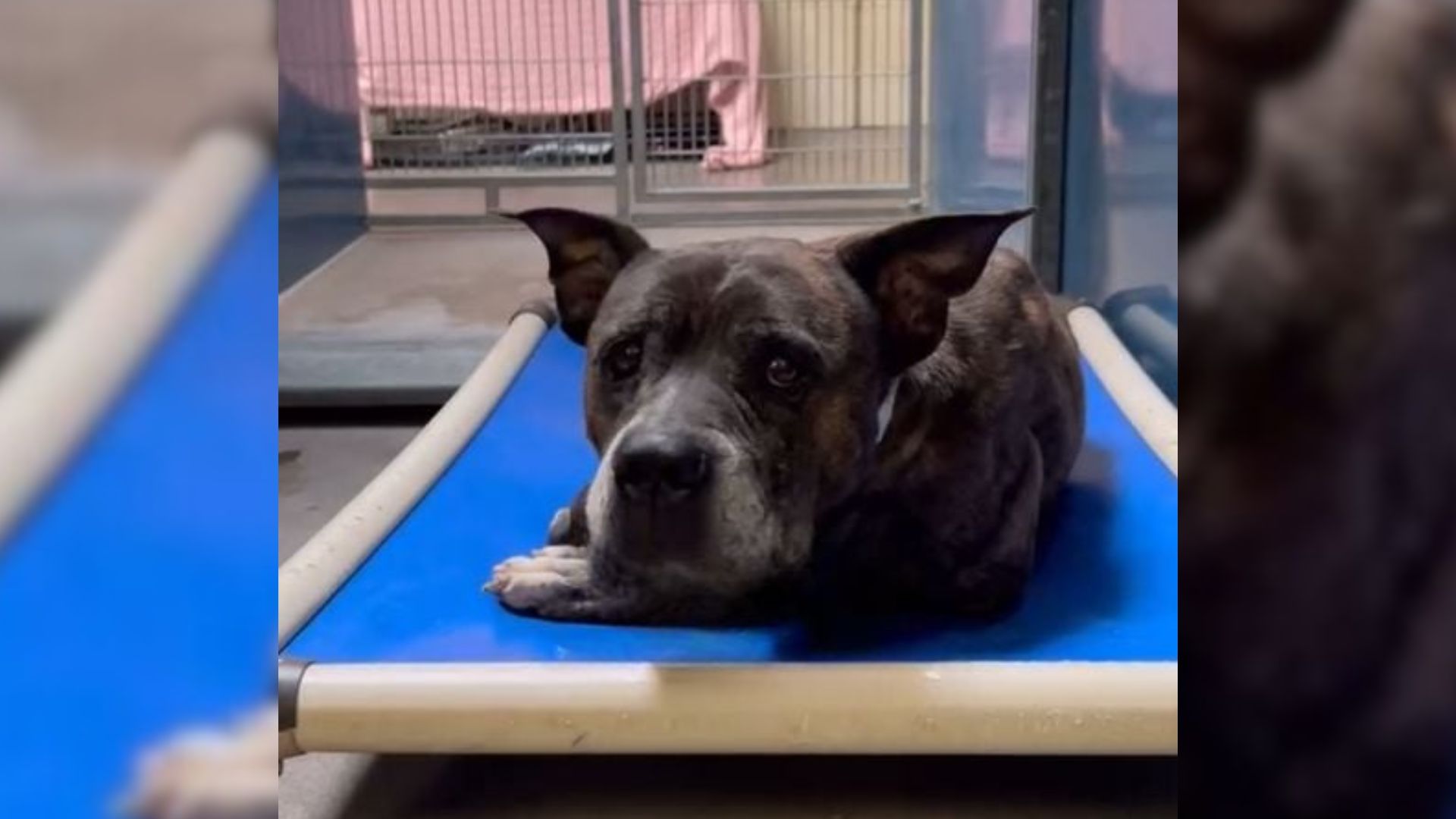
Senior Pup In Arizona Gets A Second Chance Then Receives Devastating News
Most people would agree that senior dogs deserve softness, affection, and all the care we’re able to give them.
Even when they’re no longer bouncing around like they did in their younger years, they still fill our homes with comfort, happiness, and loyal company.
Giving them calm, joyful golden years matters more than anything.
Unfortunately, not every aging dog is given that chance. Many are passed over by potential adopters and wind up living out their last stretch of life in shelters. Serenity, a 12-year-old Pitbull mix from Arizona, came heartbreakingly close to that same outcome.
Rescue Steps In
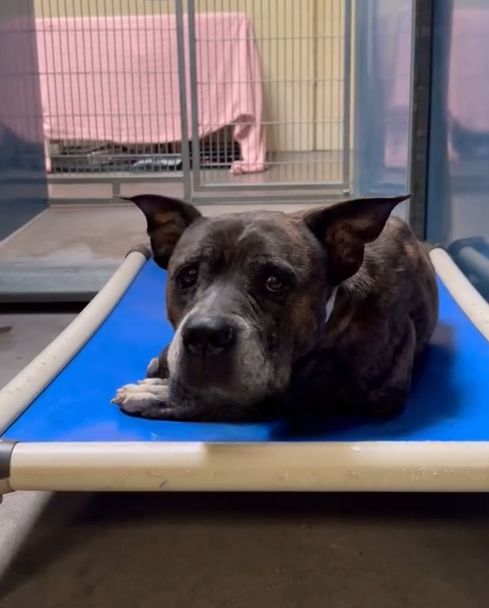
At 12, Serenity had been diagnosed with a mammary mass. With her age working against her and interest from adopters scarce, the shelter where she lived placed her on the euthanasia list.
Her story took a hopeful turn when Love Them All Sanctuary + Rescue, based in Scottsdale, learned of her situation andacted quickly.
They brought her into their care, ensuring she received medical attention and a safe, loving environment where she could feel secure once again.
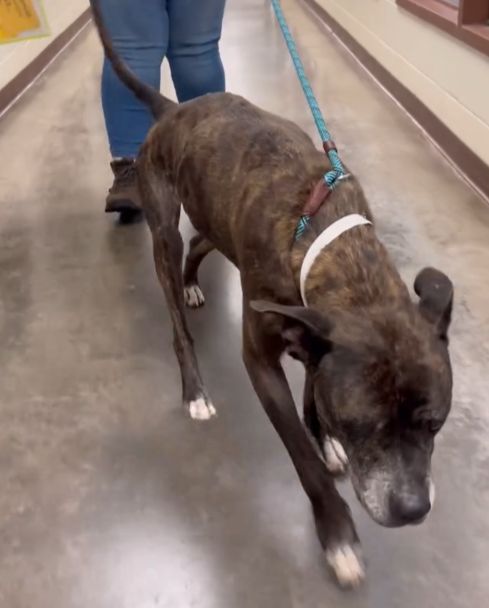
The rescue wasted no time scheduling surgery to remove the mass. During the operation, a melanoma tumor was discovered attached to her frail body.
Thanks to generous donors, the sanctuary was able to cover her treatment costs.
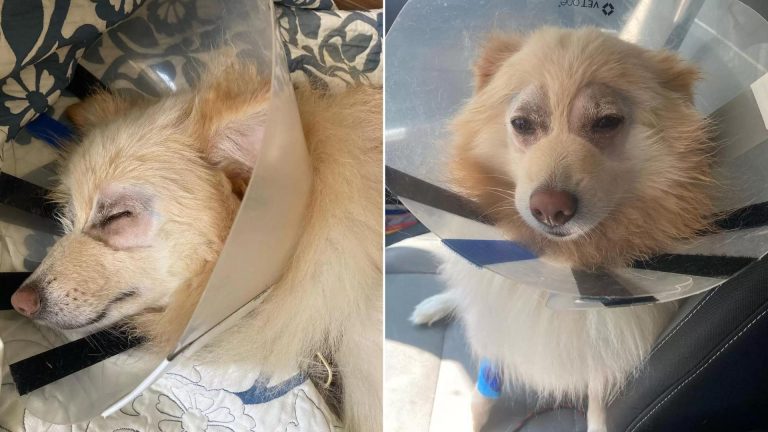
Recognizing that medical care alone wasn’t enough, the team placed Serenity with a foster family who could provide affection, warmth, and the soft, safe surroundings she needed to recover emotionally as well as physically.
Challenges Along The Way
Serenity began enjoying her foster home immediately, savoring love, comfort, and attention.
However, her follow-up veterinary visit brought difficult news. The tumor had returned as malignant.
While her future remains uncertain, everyone caring for Serenity is committed to making each day meaningful. She enjoys treats, cuddles, and moments filled with joy, embracing the love around her.
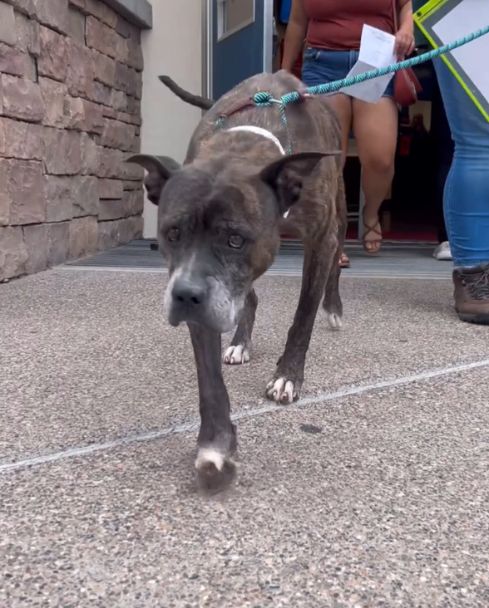
Mammary tumors are fairly common in dogs, particularly in unspayed females, and represent one of the most frequent types of canine tumors.
If a lump is noticed, only about half are malignant, meaning a lump does not automatically indicate cancer.
Surgery is generally the first and most effective treatment, though tumors can sometimes recur, as in Serenity’s case. Repeat procedures can offer dogs additional time and improved quality of life.
If you discover an unusual lump on your dog, the best course is to remain calm and schedule a veterinary evaluation to determine the proper treatment and next steps.