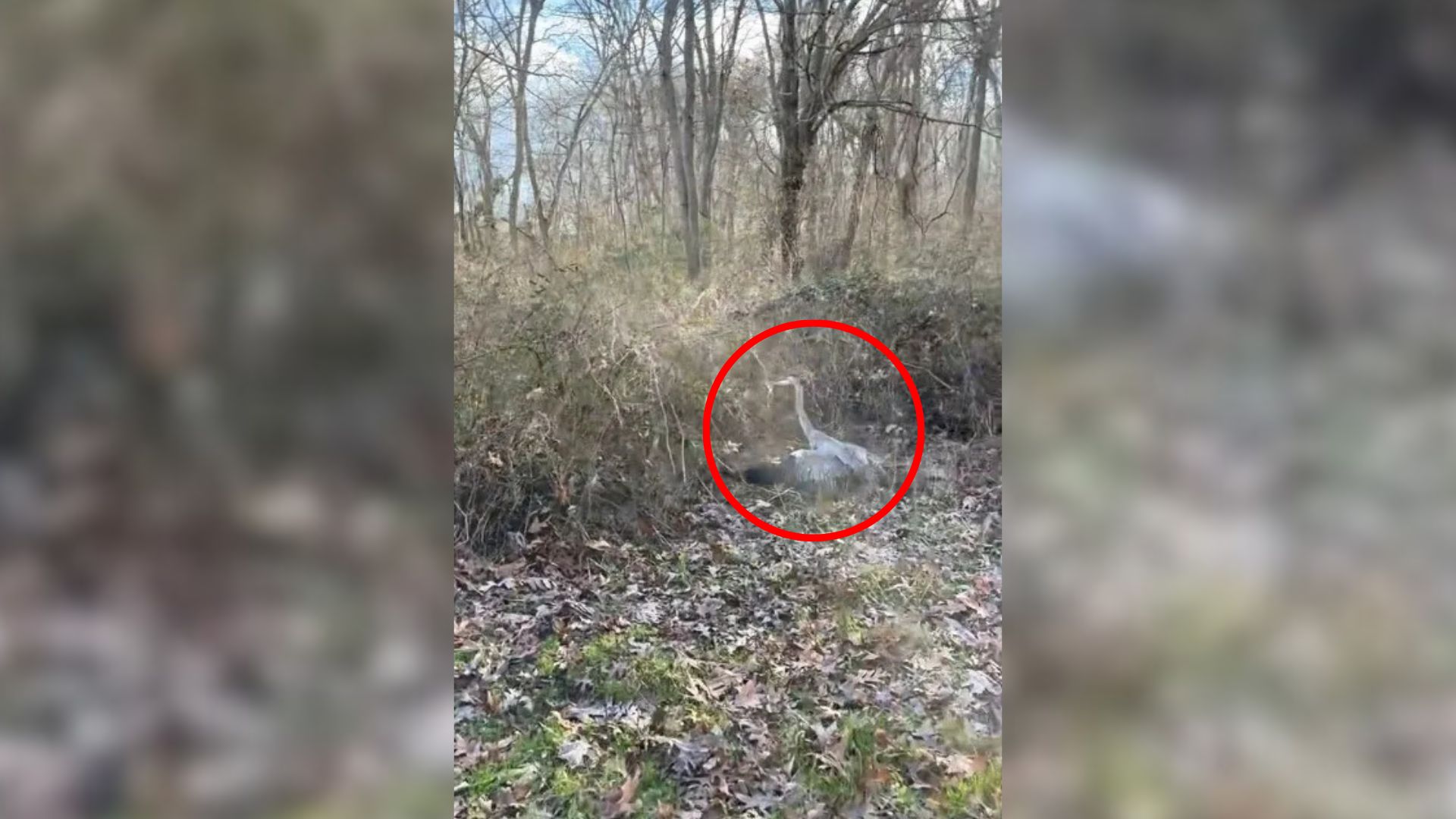
One afternoon, as an older man was out for his usual walk through the peaceful woods of Massapequa Park in New York, something unusual broke the silence. It wasn’t the typical sounds of birds chirping or the rustle of leaves in the breeze. Instead, a deep, unfamiliar call echoed through the trees.
The sound was unlike anything he’d ever heard before—almost primal, like something from another time, not a bird, but something else entirely.
Curious and concerned, he followed the strange noise deeper into the woods. What he discovered was both shocking and heartbreaking: a large wild bird, tangled in thick brush, crying out in distress.
A Cry That Couldn’t Be Ignored
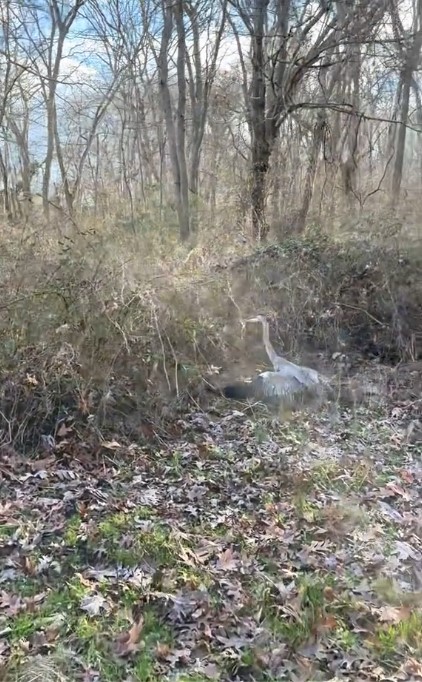
Entangled in heavy vines and thorny undergrowth was a great blue heron, one of the tallest and most recognizable wading birds in North and Central America.
The helpless heron was trapped tightly and unable to move. His distress was obvious, and he desperately needed assistance.
Wanting to help but unable to free the bird himself, the man contacted wildlife rescuer Karenlynn Stracher. A retired New York City paramedic and licensed rehabilitator, Stracher spends her time caring for injured wildlife in Nassau County.
As soon as she received the call, she headed to the park. The moment she arrived, she immediately heard the eerie cry the man had described.
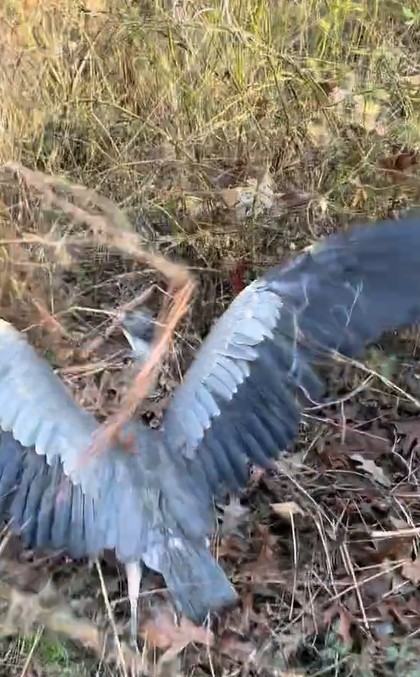
“They sound like dinosaurs,” she wrote in her video posted to her TikTok page.
When she reached him, she saw that the heron’s wings were wrapped so tightly in vines that he could not spread them. The bird was frightened and hurting. Despite his condition, he tried to pull away.
“He was very frightened but started to calm down somewhat as I freed him,” Karenlynn Stracher told The Dodo.
Although she understood his fear, she wished he could sense that she was there to help him, not harm him.
Working slowly and carefully, Stracher removed the tangled vines, eventually freeing the bird’s wings. Seeing him up close, she could finally appreciate his impressive size and elegant features. Once his wings were loose, she lifted him gently and placed him into a carrier to keep him safe for transport.
Healing After A Close Call
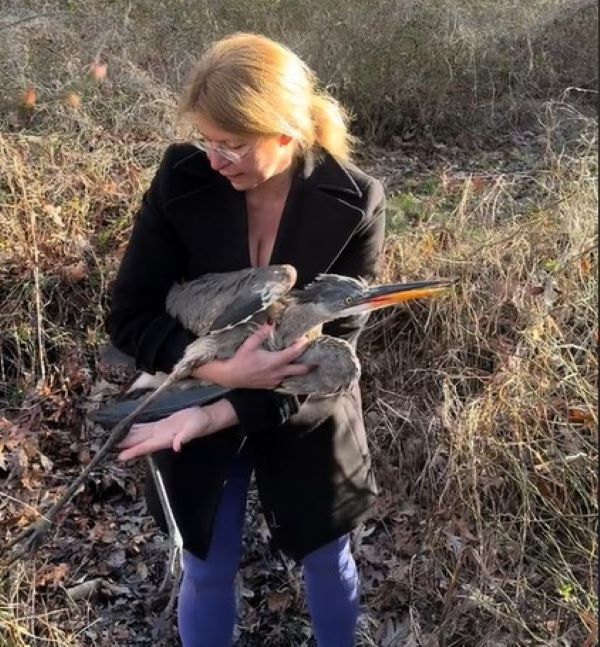
Most great blue herons migrate to warmer areas for winter, though some remain in colder regions. Those that stay must rely on unfrozen water sources and consistent access to food in order to survive.
This injured heron was one of the lucky ones. Found just in time, he received the help he needed to survive another day.
His condition revealed what had led to his entrapment. He appeared to have been hit by a car, which left him unable to fly. His beak was damaged, and one of his legs had also been hurt, leaving him vulnerable on the ground and unable to escape the dense brush.
Stracher transported him to her partners at Sweetbriar Nature Center New York, where veterinary staff could evaluate him fully and develop a plan for his recovery.
The rescue mission can be seen here:
@wildliferehab_kl https://linktr.ee/cookiekl #wildlife #wildliferescue #wildliferescuer #wildliferehab #wildliferehabilitation #wildliferehabber #greatblueheron #greatblueheronrescue #bird #birdrescue #injuredbird #everylifematters #blueheron ♬ original sound – KL the Wildlife Rehabilitator
Fortunately, his outlook was positive. With the proper treatment and rehabilitation, he was expected to recover well enough to return to his natural habitat.
The credit for his survival goes to the elderly hiker who chose not to dismiss an unusual call in the woods. His willingness to investigate and seek help made all the difference.
Without his compassion and attentiveness, the heron’s story would have ended very differently.
For anyone moved by this rescue, supporting organizations like Sweetbriar Nature Center ensures that many more injured animals will receive lifesaving care.